Architecture
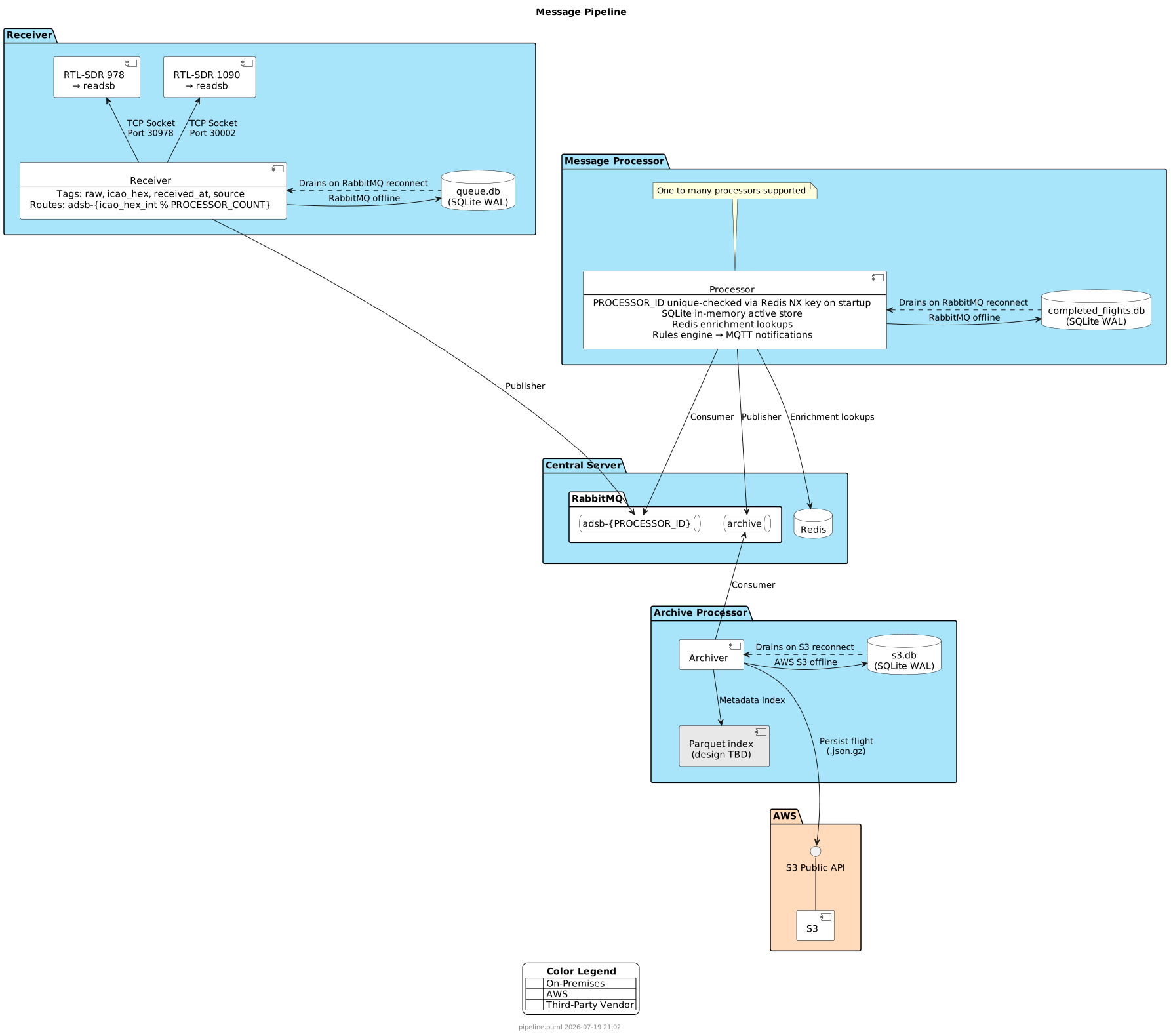
The full message pipeline, from ADS-B reception through to archived flights in S3, including the RabbitMQ offline-fallback path at each hop.
Scaling Message Processors
Sizing: a message processor is CPU-bound (parsing, rules engine, enrichment), so the number of instances on one compute device should leave at least one CPU thread free for the OS and every other container on that host — as a starting point, (CPU threads − 1). A Raspberry Pi Compute Module 4 has 4 threads, so 3 message processors is the suggested maximum there, not 4.
Receivers publish every message to the durable skyfollower-adsb exchange, of type x-consistent-hash, keyed by the aircraft's ICAO hex. Each message processor declares and binds its own durable queue, skyfollower-message-processor-{MESSAGE_PROCESSOR_ID}, with a weight of 1. The exchange hashes the routing key against the bound queues and delivers each message to exactly one of them, so an aircraft stays with one message processor and the per-aircraft flight state it holds.
No receiver knows or cares how many message processors exist, so no resize ever restarts a receiver — which matters, because a receiver restart is an ingest gap: it is reading live TCP streams, and whatever arrives while it is down is gone.
MESSAGE_PROCESSOR_ID is a single flat, fleet-wide sequential number, and that one ID is used verbatim — no local/global translation — as the compose service name, container name, RabbitMQ queue name, Redis heartbeat key, and data directory alike: skyfollower-message-processor-{id} everywhere. docker-compose.message-processor.yaml, as fetched from the repo, is static — a shared environment anchor and a profile-gated template service every instance extends. scripts/install.sh writes each ID to message-processors/{id}.env and generates the per-ID services into the node's docker-compose.instances.yaml: it asks whether this run is replacing an existing processor (adopts one specific ID) or adding new ones (asks how many are currently implemented fleet-wide and how many this host will add, then computes the new IDs as existing_count+1 through existing_count+num_new). To add a message processor to an existing node, just re-run scripts/install.sh for that role — it adds the new env file(s) and service(s) without touching already-running instances.
That is the entire procedure — no COMPOSE_PROFILES line to write, no block to uncomment. Each instance gets its own bind-mounted data directory (./data/skyfollower-message-processor-{id}), so no two share an active flight store.
IDs are unique across the deployment by construction rather than by convention: they're sequential and fleet-wide, decided by the operator answering install.sh's prompts rather than derived from anything local to a node (a hostname, in particular, would make replacing a node's hardware awkward — the new node would compute a different value). Sequential, not random, is deliberate: it preserves the ability to reason about creation order, which the "remove the last-bound instance" scale-down guidance below depends on. The message processor still claims its ID in Redis on startup and exits if another instance already holds it.
Measured over 5,000 randomly generated ICAO hexes:
| Operation | Aircraft moving to a different message processor | Receiver restart |
|---|---|---|
| Add a message processor | ~20%, all onto the new one | None |
| Remove the last-bound message processor | ~20%, redistributed evenly | None |
| All message processors restart, any order | 0% | None |
| Remove a message processor from the middle | ~68% | None |
Slots inside the exchange are positional and assigned in binding order, which is why removal must happen from the end: deleting a queue in the middle slides every later queue down and rehashes most aircraft. Treat message processors as a stack — add and remove at the end. A restart moves nothing at all, because the binding is durable state held by RabbitMQ and rebinding an existing binding is a no-op.
None of this is data loss. Nothing is dropped, and every message still routes and processes. In-progress flights for reshuffled aircraft split: the old message processor's partial state ages out after flight_ttl_seconds and archives as one segment (via the crash-durable eviction path — see Crash Recovery & Backlog Replay below), the new one starts another, and the archive processor's split-flight stitching merges the adjacent segments. The cost is degraded archive quality for a few minutes.
Stitching is keyed on a short-lived Redis pointer (archive:last_segment:{icao_hex}, 1-day TTL) and fails soft: if Redis is unreachable, the pointer lookup/update is skipped and the segments are simply left unmerged rather than blocking the archive write. See Split-Flight Stitching in the archive processor's README for the full behavior.
A decommissioned message processor's residual active_flights.db does not need to be drained or preserved — any flights it was still tracking are abandoned, and surviving message processors start fresh flights for those aircraft the next time they are seen.
Crash Recovery & Backlog Replay
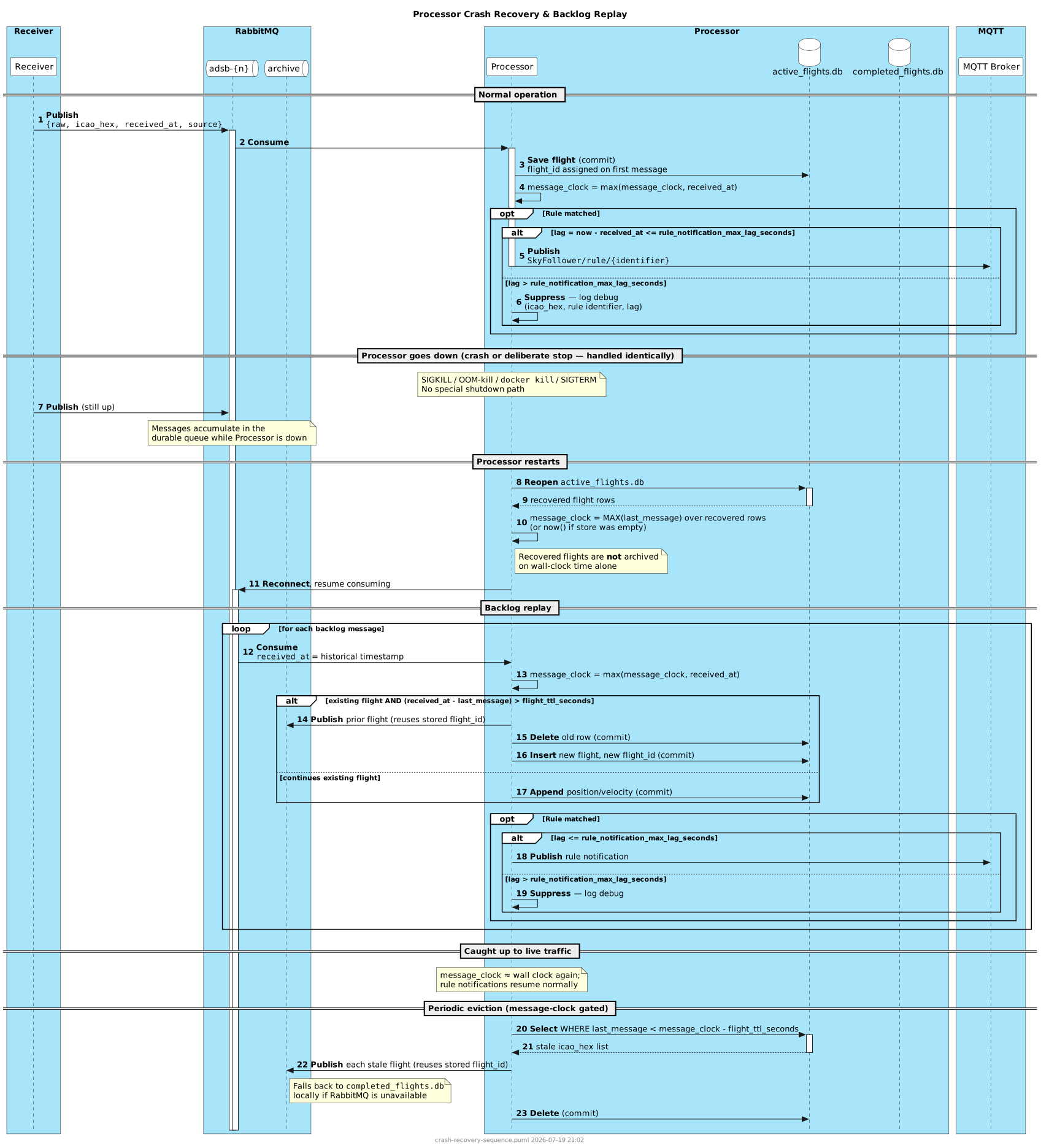
The message processor's active flight store is file-backed and survives a process restart — deliberate or a crash — without losing in-progress flights. See Fault Tolerance in the message processor's README for the full behavior, including how recovery avoids archiving flights just because wall-clock time passed while the container was down.
Receiver — RabbitMQ Offline Fallback
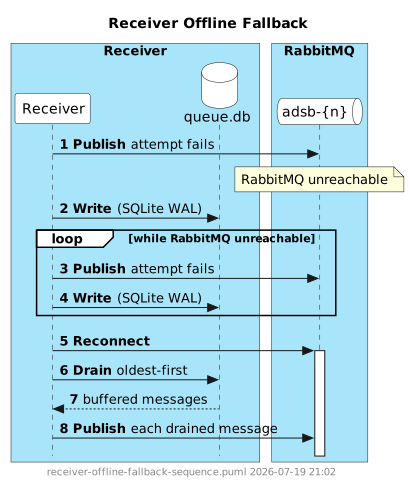
Independent of whether a message processor is up, the receiver itself tolerates RabbitMQ being unreachable. The threads reading the readsb sockets never publish directly — they drop each parsed message on a bounded in-memory queue and return straight to the socket, so intake is never blocked by the broker or by backlog drain. A single dedicated thread publishes from that queue. Routing is gated by one shared in-memory flag, backlogged: while clear, new messages go straight to the fast in-memory queue; the moment a publish fails or that queue is full, the flag is set and every subsequent message — from every source thread — spills to a local queue.db (SQLite WAL) instead, so nothing new can leapfrog an older row still waiting there. The flag only clears once both the in-memory queue and queue.db are confirmed fully drained, and the backlog itself always drains oldest-first. See #1956 for why a simpler "always drain live traffic first" rule isn't sufficient.
Message Processor — RabbitMQ Offline Fallback
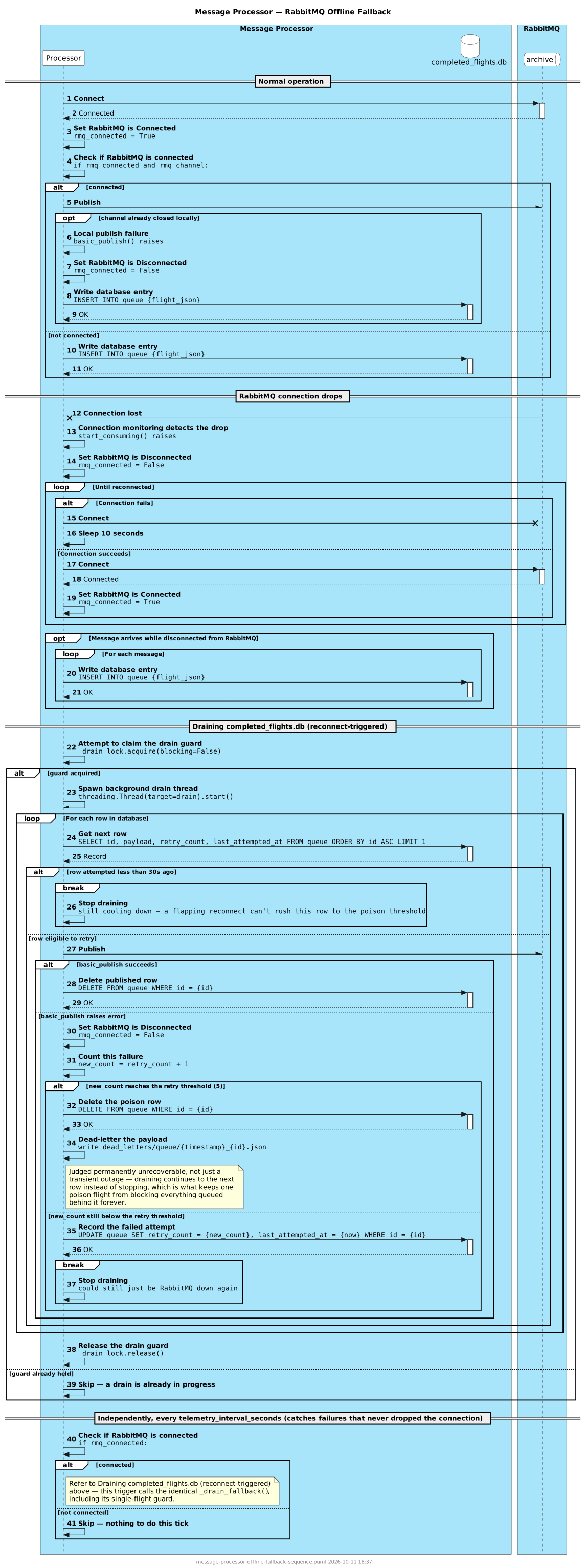
Independent of the receiver, the message processor tolerates RabbitMQ being unreachable on its own publish side (archiving completed flights): publish attempts that fail buffer to a local completed_flights.db (SQLite WAL) and drain oldest-first once RabbitMQ is reachable again — on reconnect, and independently every MQTT_PUBLISH_INTERVAL_SECONDS, to catch a publish-only failure that never dropped the underlying connection.